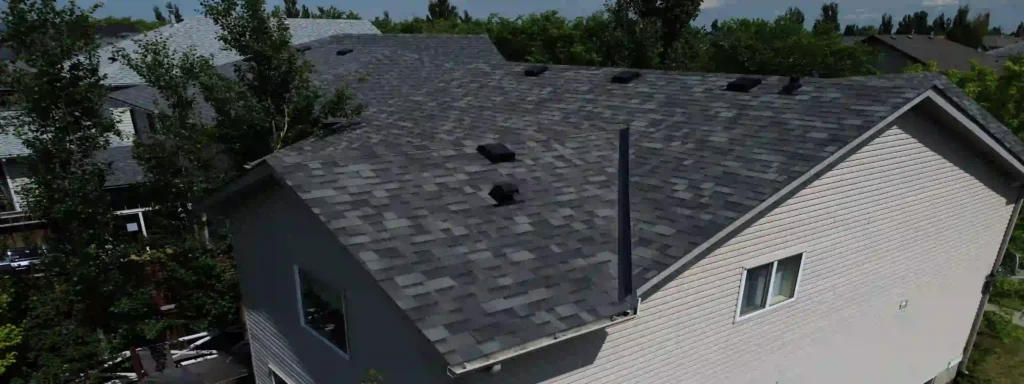
Does home insurance cover wind damage? For Calgary homeowners the answer is yes but the conditions matter more than the headline. A Chinook that’s peeling the shingles off a south-facing slope or pulling the siding away from a wall are the types of events that standard policies are written to cover. The claim in that instance will still be subject to how the damage is documented, what condition the materials were in prior to the event and how the policy defines the peril.
After every wind event we see the same thing. The homeowners who have a proper understanding of their policy before they even call their insurer get through the claims process much quicker and with far fewer surprises. This guide sets out what their policies typically cover, the areas where claims tend to go wrong and what you need to be doing in the days immediately following the damage. At Lumina Roofing & Exteriors, we inspect wind-damaged Calgary homes every season, and we have seen what separates a smooth claim from a frustrating one.
Does Home Insurance Cover Wind Damage? The Short Answer
In most cases, yes. Standard homeowner policies in Alberta normally treat windstorms as a peril. Therefore sudden damage to shingles, siding, soffits and fascia is usually covered. The key words are sudden and accidental. Home insurance policies answer to an event, such as a particular Chinook night instead of to wear and tear that accumulates over years.
That difference explains why the question “does home insurance cover wind damage?” rarely gets a simple yes or no for one house. Two neighbors can file claims after the storm and receive different outcomes because roof age, shingle condition and the exact wording of the policy all shape how the insurer interprets the loss.
What Sudden and Accidental Means After a Chinook
Calgary Chinooks are textbook events. Sustained winds of 112 to 137 km/h arrive within hours and gusts above 160 km/h are recorded on exposed southwest properties. Shingles that were stiff in sub‑freezing temperatures face near‑peak loading before they can flex.
Typical covered outcomes include shingles, lifted tabs, a displaced ridge cap flashing pulled from a chimney vinyl siding panels separated at the nailing hem and the water intrusion that follows when the weather barrier is breached. What ties them together is a link to one identifiable storm.
Damage that you notice weeks later is not automatically excluded. So does home insurance cover wind damage that you only notice weeks later? It can if you can connect it to a dated event, with weather records and photographs. Waiting long to report however gives the insurer room to question the cause.
We walk homeowners through this before they ever speak with an adjuster. At Lumina Roofing & Exteriors, we document what the wind actually did to the roof and exterior. We are contractors, not insurance advisors, so your broker or insurer has the final word on your specific coverage.
Where Claims Get Complicated: Roof Age and Existing Wear
Does home insurance cover wind damage on a roof that was already worn? That is where most conflicts start. An insurance company might say that lifted tabs on a twenty-year- roof show old glue instead of damage from a storm especially when there is granule loss and curling across the whole roof.
Some insurance policies also pay for roofs based on actual cash value, which takes away value over time instead of covering the full cost to replace it. The age of the roof is listed differently by each insurance company so looking at the roofing part of your policy before a storm is worth the twenty minutes it takes.
Proof of what was before helps. Pictures that have dates on them, a report from an inspection done in a few years or a permit from a recent installation all back up the idea that the roof was in good shape, before the event. Without those, a professional check after the storm is your chance to prove your case.
Deductibles and Policy Limits in Alberta
Deductibles apply to wind claims like any other covered loss and they vary widely between policies. Some policies list one flat amount while others set a separate deductible for wind and for hail. I recommend you look at the declarations page because it shows this information and it is the first page you should open.
The impact on your premium deserves a discussion with your broker. A claim that is slightly above the deductible may cost you more in renewal costs than the amount you receive in payment and the calculation changes with your claims history and with your insurer. It is suggested you talk to your broker about this scenario before you file, not after.
Reading your declarations page gives you more information than any general answer about does home insurance covers wind damage in Alberta. Look for the deductible, the roof settlement basis, the limit, for structures and any endorsements that add or remove wind coverage for specific features.
Does Home Insurance Cover Wind Damage to Fences, Sheds and Detached Structures?
Usually, but with limits. Detached garages, sheds and fences typically fall under another structures section often set as a percentage of the coverage. A big Chinook can exhaust that limit faster than owners expect when a fence line and a garage roof both suffer damage.
Fences are the common surprise. Long runs of cedar panels can fail in an event and the replacement cost may exceed the deductible by only a modest margin. Check whether your policy covers fencing under the wind peril or applies a sub-limit.
Trees add another layer. Insurers often respond differently to a tree that damages a covered structure than to one that simply falls in the yard, and removal coverage tends to be capped. If a branch lands on your roof, photograph the contact point before anyone cuts it away.
Documenting Wind Damage Before You Call Your Insurer
When homeowners ask does home insurance cover wind damage, our first answer is to start a paper trail. Take time-stamped photos of every elevation and roof slope before cleanup, at wide, medium, and close range, so the insurer sees both context and detail.
Pull the weather record for the date. Environment and Climate Change Canada publishes historical wind speeds for Calgary stations, and a printout showing gusts near 160 km/h supports the timeline better than memory does. Keep any shingle pieces you find, since the torn edge tells its own story.
Then consider a written assessment from a qualified contractor before the adjuster arrives. It records which failures match the storm, which look like age and what the layers beneath the surface show. It does not replace the adjuster’s role. It gives you a documented reference point.
How Adjusters Evaluate Wind Claims on Calgary Homes
Adjusters read the pattern first. After a southwest Chinook direct pressure damage tends to concentrate on the south and west faces while suction from airflow over the peak lifts material on the leeward slopes. A damage map that follows the storm direction supports the claim.
They also look at how the materials were attached. Fasteners driven high spaced thinly or missing from the nailing zone suggest an installation issue that may have contributed to the failure. Brittle strips and widespread granule loss point, toward age.
Real claims are often mixed. So does home insurance cover wind damage when the pattern shows both storm force and wear frequently covers part of it, and the scope discussion centers on which components the storm genuinely failed. A clear contractor report keeps that conversation specific.
Temporary Repairs and Protecting the Home From Damage
Most policies expect you to take reasonable steps to prevent further loss. Does home insurance cover wind damage repairs you make before the adjuster visits? Emergency measures such as tarping an exposed deck usually qualify, while permanent repairs deserve a call to the insurer first.
A heavy polyethylene tarp, extended past the eave and held with ballast rather than fasteners through the roof protects a Calgary deck through a typical week of mixed weather. A tarp that is only weighted at the corners will not survive a Chinook.
Keep receipts photographing the area before and after the work and leave the damaged material available for inspection. Those habits protect the claim. Show that the loss was handled responsibly from the first day.
For Calgary homeowners dealing with wind-related roof damage a professional inspection provides information when discussing the scope of damage, with an insurance adjuster.Explore Lumina Roofing & Exteriors to understand the available options for restoring your home’s protection.
Should You File? Weighing Small Repairs Against Your Premium
So does home insurance cover wind damage small enough to sit under your deductible? The risk is covered on a technical level, but no payment is made when the deductible has taken out the cost; in such situations, it might be more sensible to carry out a simple repair using your own money rather than make a claim.
The opposite is true in the case of larger claims. If there is widespread tab lifting, the ridge has shifted, the flashing is damaged and there is water in the attic, or if there is siding damage on more than one side, these issues soon exceed most deductibles. It is necessary for the inspection to determine which category your house falls into before you make your decision.
If you’re unsure, get the assessment first. Only then will you be able to make your decision about filing based on facts rather than guesses, having first become aware of the full extent of the damage, even that which is concealed beneath the shingles.
Does home insurance cover wind damage? Make sure you understand your policy before the next Chinook.
The short answer to the question of whether home insurance includes coverage for wind damage is yes, in most situations involving sudden storms, the exact details however depend on the deductibles, the age of the roof, the method on which the claim is settled and the quality of your documents. If you understand these factors in advance, you will be able to turn what would otherwise be a stressful claim into one that is manageable when the next Chinook arrives.
Each season our crews observe the consequences of such incidents in Calgary, and it is those homeowners who have had the smoother experiences who have kept records, reported promptly, and asked questions early on.
If a recent wind event left you uncertain about what your roof or siding sustained, contact Lumina Roofing & Exteriors for a professional wind damage assessment, and we will document what the storm did so you can approach your insurer with confidence.