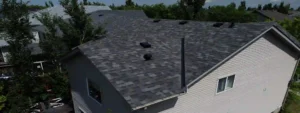
What does wind damage look like on a roof is one of the most practical questions a Calgary homeowner can ask after a Chinook event or a spring windstorm, and the answer is more layered than most people expect. The obvious version, shingles sitting in the yard and a visible gap in the roof field, is what everyone pictures. That version is the easiest to respond to because nobody misses it.
The version that causes more problems is the roof that looks completely intact the morning after a 90-mile-per-hour Chinook, where the visible damage is zero and the actual damage is extensive: broken adhesive strips under tabs that re-seated when the wind dropped, ridge cap that shifted a few inches off its sealed position, flashing that was pulled away from the chimney seal by suction forces on the leeward side of the roof and settled back when the pressure equalized.
Calgary’s wind environment causes both types of roof damage regularly. Knowing what to look for. From the obvious to the invisible. Helps a homeowner decide if they should call right away or wait for a professional inspection later in the week.
At Lumina Roofing & Exteriors we do wind damage checks on Calgary roofs every active season. Over and over we see the thing: the most costly damage is the kind you can’t see from the ground. It goes unaddressed for months letting moisture in and, by then it’s already caused problems.
What does Wind Damage Look Like on a Roof: Visible Signs
Calgary homeowners can look at roof damage from the ground of climbing onto the roof. The main things to check are missing shingles because missing shingles need fixing. Missing shingles expose the underlayment. Break the waterproof barrier. Calgary homeowners must act fast because Calgary weather can change quickly after wind events. Rain, snow and freezing temperatures can hit after the wind and exposed roof areas will soak up moisture. This moisture makes the damage worse before a repair can be done.
When you write down where the missing shingles are you get clues. If the missing shingles are on the southwest sides after a Chinook event it means the wind pushed the shingles off. If the missing shingles are on the north or northeast sides it means suction from pressure pulled the shingles away. Knowing which slopes have missing shingles helps Calgary homeowners with insurance claims and planning the repair.
You can also see lifted or curled shingle tabs on the part of the roof. These tabs may look like they are stuck back in place. There is a small gap that shows they are loose. These lifted tabs mean the shingles could fall off in the wind. Calgary homeowners should look for these tabs because they are often missed in checks. Ridge cap displacement also shows that the roof was hit by wind giving proof of wind damage.
This exposed component often reveals signs of failure from the ground, including misalignment with the roof peak, lifting that exposes daylight underneath, or separation between adjacent cap pieces. These observations, because they are very vulnerable and visible, need help before the next weather event no matter what condition the field shingles are in. Properly writing down these aspects makes sure we fully understand the roof damage and repair needs.
What Wind Damage Looks Like in the Gutters and Around the Property
Wind damage on a roof is best assessed by looking at not the roof surface but also the gutters and surroundings. The presence of granules in the gutters after a wind event especially if there are granules than normal wear means that the wind was strong enough to knock off material from the shingles. Old shingles, which already have granule adhesion, can get hurt faster by strong winds making them last less time.
Comparing granule samples from the downspout after a storm helps find out if loss is big. If shingle pieces or whole shingles are found in yards or gutters that shows material was lost and needs replacing before rain.
Keeping these pieces is important for two reasons: they are evidence for insurance claims showing how damage happened. They help make sure new materials match old ones for future repairs. Also debris near fascia or in gutters or downspouts shows wind speeds were high enough to move surrounding materials giving context for insurance checks.
What Wind Damage Looks Like That Is Not Visible from the Ground
What does wind damage look like on a roof in Calgary often stays hidden from the ground and needs a professional close‑range check. Non-visible failure modes can be as critical, or even more so, than visible damage, prompting the need for inspections following significant wind events. Commonly, after a Calgary Chinook, broken adhesive strip bonds on seemingly intact shingles surface as a major concern.
A shingle tab that was lifted by wind pressure and then put back in place looks fine. The glue that holds it has failed. It is now only held by fasteners. The fasteners stop it from being lifted up. They do not keep it from being pushed sideways by wind. A roof with broken glue bonds can lose shingles when a strong wind like a Chinook comes again.
To find glue bonds, lift the lower edge of each shingle tab. If there is no resistance the glue is broken. This can make the repair job larger than patching. It may need re‑securing or even full replacement.
Flashing that moves around chimneys, skylights and other transitions is another danger. It can cause interior damage before we notice it. We often miss this damage from the ground. Problems like chimney counter flashing coming or step flashing lifting let water get inside when it rains, no matter how good the shingles are. That is why we need inspections after a wind event to find these hidden problems.
What wind damage looks like inside the attic
What does wind damage look like on a roof shows what the attic space under the roof reveals after a big wind event. Many homeowners forget that the attic inspection is a part of a thorough check. The attic gives clues that neither the outside check nor the inside ceiling can give alone.
When you close the vents and lights, the fresh daylight that comes through the roof deck at the damage spot shows that the wind has made a hole in the decking. It is not a hole in the shingle and underlayment.
That makes the repair more urgent. Moisture that reaches the deck starts the decay that can hurt the strength of the sheathing.
New water stains on the underside of the roof deck, at spots that match the wind damage stains that were not there before and appear after the rain prove that there is already a path for water to get in. Those stains are the sign that the repair needs to happen right away.
Insulation conditions near the eave zone after a significant wind event is worth examining specifically in Calgary homes where the soffit venting was subjected to the full wind load. Wind pressure strong enough to displace roof shingles can also force air in volume through the soffit intake vents, and in some cases that air movement displaces the insulation baffles or the insulation itself at the eave line.
Insulation that has moved away from the edge of the roof lowers the R-value of the system right where heat loss is most likely to cause ice dams in the next cold periods.
The Difference Between Wind Damage and Normal Aging on a Calgary Roof
Part of understanding what does wind damage look like on a roof is learning how to tell the difference between damage caused by wind and the changes that happen to asphalt shingles as they get older. This difference is important for the insurance claim for deciding whether to fix the roof and for getting an idea of how the roof is doing.
Wind damage happens where the roof is most likely to be stressed: the edges of the shingles where the wind tries to lift them the ridge cap where wind comes from both sides at the same time the nails on the side facing the wind where pressure tests how well they stay in place and the areas around the flashing where the wind pulls on the edges of sealed parts.
This pattern, where damage happens in the spots and the areas in between stay mostly okay is a sign that the problem came from wind and not from getting older.
Normal aging affects the roof more evenly: the top layer of the shingles wears away slowly from the area that faces the sun across the whole roof, the shingles start to curve or curl as they get older and the surface gets lighter and changes color over the whole roof instead of in certain spots.
At Lumina Roofing & Exteriors the inspections we do after wind events in Calgary are set up to find and record both the damage caused by the wind and the condition of the roof before the storm because the best way to help a Calgary homeowner is to give a picture of how the roof is after the event instead of just showing the pieces that were taken off. Learn more about our storm damage services to see how we handle wind damage reports and what does wind damage look like on a roof.
When What You See Requires Immediate Action
Knowing what does wind damage look like on a roof is most useful when it is paired with a framework for what the findings require in terms of timing and response. Not every post-wind finding has the urgency and understanding the difference allows Calgary homeowners to prioritize correctly rather than either panicking over minor damage or underreacting to something that needs same-day attention.
Same-day response is warranted when the deck or underlayment is exposed through missing shingles and precipitation is forecast within 24 hours. It is also needed when a ridge cap section has fully separated and the peak of the roof is open to the weather. Another situation that calls for same-day response is when an attic inspection reveals that moisture has already entered the assembly through the storm damage.
Those conditions combine vulnerability with an imminent threat. In cases temporary protection measures like tarp installation should be in place before nightfall not scheduled for the following week.
Within-the-week professional inspection is appropriate when the ground assessment shows lifted tabs, displaced ridge cap without separation or granule loss that suggests the wind event was energetic enough to affect the roof without producing visible shingle loss. These conditions are not emergencies in the precipitation sense but they represent damage that needs to be assessed and addressed before the next significant wind event compounds what the first one started.
A scheduled professional assessment within the month is reasonable when the ground assessment and accessible observations show no shingle loss or obvious component displacement. If the wind event was significant enough the non-visible failure modes, like broken adhesive strips or flashing displacement are plausible given the wind speeds recorded.
Getting the Accurate Picture Your Roof Needs
What does wind damage look like on a roof is a question that has a visible part and a non-visible part, the visible part is the smaller of the two in terms of the repair decisions it drives. The most consequential findings after a Calgary wind event require professional access to the roof surface and to the attic space to identify, and those findings are the ones that determine whether the response is a targeted re-securing job or a more extensive scope.
If your Calgary home has been through a significant wind event and you want to know the full picture of what your roof actually sustained beyond what the ground assessment reveals, contact Lumina Roofing & Exteriors to schedule a professional wind damage inspection. We will give you an accurate assessment of every layer of the damage before you make any repair or insurance decisions.