The average cost of roof replacement in Calgary sits in a range that surprises most homeowners the first time they see a quote, and not always because the number is unreasonable. It is because the variables that determine where on that range a specific project lands are not visible in a number pulled from an online search or a national average built from markets that do not share Calgary’s labour costs, climate requirements, or hail exposure history.
A roof replacement in this city is not the same project as a roof replacement in a milder Canadian market, and the differences are not cosmetic. Ice and water shield requirements at the eave are a building code mandate in Alberta. Class 4 impact-rated shingles are a practical specification for most primary residences in Calgary’s hail corridor.
Tear-off of an aging shingle system that has absorbed multiple freeze-thaw seasons and potentially several hail events produces scope variables that a simple square footage estimate cannot account for in advance.
Understanding what the average cost of roof replacement actually reflects in Calgary’s specific market, what pushes it toward the lower end of the range, and what legitimately moves it higher is the foundation of a project decision that holds up under scrutiny when the quotes arrive. At Lumina Roofing & Exteriors, we replace roofs across Calgary’s residential market every season and the figures in this piece reflect what projects in this city actually cost in 2026.
What Roof Replacement Includes That New Construction Does Not
The average cost of roof replacement differs from new construction roofing in ways that the per-square-foot figures alone do not communicate. A replacement project begins with tear-off of the existing roofing system, which adds labour, disposal logistics, and a discovery process that new construction does not involve. When the tear-off is complete, the deck beneath the old material is exposed for the first time in years, and what that deck reveals shapes the remainder of the project scope in ways that no pre-tear-off assessment can fully predict.
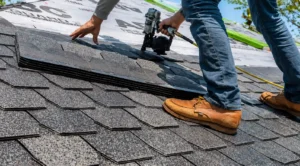
Tear-off and disposal of a single layer of asphalt shingles on a typical Calgary home adds $1,500 to $3,500 to the project total depending on roof size, access conditions, and the disposal facility costs in the Calgary market. Homes that carry two or more existing shingle layers, either from previous overlay installations or from multiple re-roofing cycles without full tear-off, require more disposal volume and more labour time to strip back to the deck.
Alberta building requirements limit the total layer count on residential roofs, which means any home that has already received one overlay cannot receive another without first removing the accumulated material to the deck level.
The deck exposure that follows tear-off is the point where the average cost of roof replacement can diverge most significantly from the pre-project estimate. A deck in sound condition stays within the original scope and the project proceeds at the quoted price. A deck with moisture damage, soft sections, or areas of delamination from years of ice dam intrusion or condensation adds sheathing replacement to the scope at a per-sheet rate that responsible contractors disclose before the project begins.
On Calgary homes that have carried a failing roof through several seasons, that deck repair scope can add $1,000 to $4,000 or more to the total depending on the extent of damage revealed.

Average Cost of Roof Replacement by Material in Calgary’s 2026 Market
Architectural asphalt shingles remain the dominant replacement specification for Calgary residential primary structures, and the average cost of roof replacement using architectural shingles on a typical 1,500 to 2,200 square foot Calgary home runs between $9,000 and $16,000 for a complete project. That range covers tear-off and disposal of a single existing shingle layer, deck inspection with a standard repair allowance, ice and water shield at the eave and detail areas, synthetic underlayment across the field, new drip edge, field shingles, and ridge cap installation.
Class 4 impact-rated architectural shingles, the specification that Calgary’s hail corridor warrants on most primary residences, add $1,000 to $2,500 to the architectural shingle range above. For a homeowner whose previous roof sustained hail damage that resulted in an insurance claim, or whose property sits in one of Calgary’s higher-exposure corridors, the Class 4 specification is a legitimate investment rather than a discretionary upgrade, and the insurance premium adjustments that some Alberta providers apply to Class 4 rated roofing offset a portion of that material premium over the ownership period.
Metal roofing replacement carries a higher upfront cost that reflects material quality, installation complexity, and the extended lifespan that the investment delivers. Exposed fastener steel panel replacement systems run $16,000 to $24,000 on a 2,000 square foot roof. Concealed fastener systems sit between $24,000 and $36,000 on the same size. Standing seam metal replacement, the premium residential specification, ranges from $36,000 to $56,000 before project-specific variables are applied.
Those figures include the full replacement scope: tear-off, appropriate substrate preparation for the specific metal system, underlayment rated for metal applications, flashing replacement at all penetrations, and the metal panel installation itself.
Flat roofing replacement on residential additions, garages, or low-slope sections uses membrane systems at their own cost profile. TPO and EPDM replacement on residential-scale projects in Calgary currently runs $7 to $14 per square foot installed depending on the membrane product, insulation requirements, and drain configuration. Modified bitumen systems sit in a similar range. These figures cover the full replacement scope for each system type.
The Variables That Move Your Replacement Quote Up or Down
Roof pitch is the most consistent cost variable across every replacement project in Calgary. Steeper slopes require additional fall protection equipment, modified staging, slower installation pacing, and in some configurations different fastening methods that add labour time independently of what material is being installed. A replacement on a 4/12 pitch installs at a meaningfully different rate than the same surface area at 10/12, and the labour cost difference between those two scenarios is legitimate rather than arbitrary.
Roof complexity adds cost through both material waste and additional labour at each detail point. Valleys, dormers, skylights, multiple penetrations, hip sections, and changes in slope all require more precise material cutting, more flashing work, and more installation time than an equivalent area of simple gabled roof.
The average cost of roof replacement on a complex Victorian-era roofline in one of Calgary’s established inner-city neighbourhoods is not comparable to a replacement on a straightforward gabled bungalow of the same square footage, and any estimate that treats the two projects identically is not accounting for the work the complex roofline actually requires.
Site access conditions in Calgary’s residential landscape affect replacement cost in ways that homeowners on suburban lots with clear truck access do not encounter. Properties in areas like Inglewood, Ramsay, Capitol Hill, or Mount Pleasant frequently sit on tight lots with mature trees, narrow lane access, limited material staging area, and proximity to neighbouring structures that complicate the logistics of moving material from the ground to the roof.
What the Average Cost of Roof Replacement Includes in a Complete Quote
A complete roof replacement quote should cover tear-off and disposal of the existing roofing material, deck inspection with a disclosed standard repair allowance and stated rate for additional scope, new drip edge at the eave and rake edges, ice and water shield at the eave and all transition and detail areas, synthetic underlayment across the roof field, supply and installation of the selected roofing material, flashing replacement at every penetration and transition point including chimneys, skylights, and pipe stacks, ridge and hip cap installation, and the contractor’s workmanship warranty with its term and coverage conditions stated clearly.
Any quote that omits significant portions of that scope makes accurate comparison with other bids structurally unreliable. The items most commonly absent from incomplete quotes are the deck repair allowance and the rate for additional scope beyond it, the specific underlayment product and its suitability for the material being installed, the flashing scope at each penetration, and the workmanship warranty terms.
Permit costs are a separate consideration. Full roof replacements in Calgary that involve structural changes or material changes to the roof assembly may require a building permit from the City of Calgary.
The permit fee is modest relative to the project total, but the inspection process it initiates provides a documented record that has value for insurance claims, future property sales, and confirmation that the installation met the requirements of the Alberta Building Code at the time of completion. Contractors who propose skipping a required permit are creating a documentation gap and a liability exposure that falls on the property owner, not on the crew after they leave the site.
How to Read and Compare Replacement Quotes Accurately
The average cost of roof replacement in Calgary is a planning reference. The quotes you receive for your specific property are the numbers that matter, and comparing them accurately requires looking past the total figures to what each quote actually includes. Three quotes from established Calgary contractors covering the same scope in comparable detail give you the basis for an informed comparison. The goal is not finding the lowest total but understanding what produces the difference between bids.
Significant variation between quotes almost always traces to specific scope differences rather than contractor margin differences. The underlayment product: synthetic versus felt, and whether the product is rated for the specific roofing material being installed. The deck repair allowance: how many sheets the standard allowance covers and what rate applies to additional scope.
The flashing specification: new step flashing and counter flashing at a chimney versus re-sealing existing flashing with caulk. The disposal method: licensed disposal versus less accountable alternatives. Each of those differences represents a real cost that appears somewhere, either in the original quote or in a change order when the project reveals what the estimate did not account for.
Workmanship warranty terms are the comparison point that homeowners consistently underweight. The warranty that applies in the first years after a replacement project is the contractor’s workmanship warranty, not the manufacturer’s product warranty. Workmanship warranties in Calgary’s residential roofing market range from two years on the short end to ten or more years from contractors who stand behind their installation quality.
At Lumina Roofing & Exteriors, the average cost of roof replacement we quote reflects what we actually find on the property, not a template figure adjusted for square footage. Deck condition, ventilation performance, pitch and roofline complexity, access conditions, and the material specification that fits the home’s exposure and the homeowner’s ownership plan all feed into the number we put in front of a Calgary homeowner.
Explore our residential roofing services to understand how we structure replacement assessments and what a thorough pre-project evaluation actually covers.
Timing the Replacement Decision to Control Total Cost
The average cost of roof replacement in Calgary does not decrease over time, and the condition of the roof being replaced often deteriorates in ways that add scope when the project is eventually unavoidable. A deck that is borderline during an initial inspection may have developed additional soft sections by the time the replacement proceeds a season later.
Fascia and soffit that were in reasonable condition at the point of a first assessment may have deteriorated enough to require replacement alongside the roofing work. Flashing that needed attention but was not urgent in spring may have allowed enough moisture intrusion through one more winter to affect the framing below the deck.
The money that appears to be saved by deferring a replacement that is already overdue is frequently smaller than the additional scope that deferral generates. A $12,000 architectural shingle replacement on a roof in borderline but still-manageable condition can become a $14,500 project a season later when the deck damage that was developing has progressed to the point of requiring two more sheets of replacement sheathing and the gutter system has deteriorated to the point of needing replacement alongside the roofing scope.
Scheduling also rewards early action in Calgary’s market. Established contractors with experienced crews fill their replacement calendars during the peak season months, and homeowners who wait for a visible failure before scheduling a replacement project often face limited contractor availability during the busiest period of the year. The post-hail demand spike that follows a significant Calgary storm event concentrates replacement demand into a short window that extends lead times and can compress the weather window available for completion before the shoulder season returns.
Getting the Number That Reflects Your Actual Replacement Project
The average cost of roof replacement in Calgary is a starting point for research, not a figure that reflects any specific home. The number that drives your replacement decision needs to come from a professional assessment of your specific roof: the current deck condition, the extent of any existing moisture damage, the pitch and complexity of the roofline, the access conditions of the property, and the material specification that fits both the technical demands of Calgary’s climate and the ownership plan that determines which cost horizon matters for your comparison.
If you are ready to move from planning to a real assessment of what your Calgary roof replacement will cost and why, contact Lumina Roofing & Exteriors to schedule a professional evaluation. We will give you an honest picture of what your replacement scope includes and what your specific project costs before you commit to any contractor or any material.