The types of roof shingles available for Calgary homes cover a wider range than most homeowners expect when they start researching a replacement. What begins as a straightforward product question quickly becomes a performance conversation, because not every shingle type responds to Calgary’s specific climate demands the same way.
A shingle engineered for a moderate coastal climate performs differently here, where freeze-thaw cycles repeat through five months of winter, where hailstorms arrive with enough force to fracture standard asphalt, and where Chinook temperature swings can move thirty degrees within a single afternoon.
Understanding what each shingle type actually delivers in those conditions, not just what its product sheet claims, is the foundation of a roofing decision that holds up over the years rather than one that looks reasonable on paper and disappoints in practice.
At Lumina Roofing & Exteriors, material selection is one of the most consequential conversations we have with Calgary homeowners before any installation begins, because the right shingle for this market is not always the one with the longest warranty on the label or the lowest price per bundle at the supplier.
Three-Tab Asphalt Shingles: The Entry Point and Its Limitations
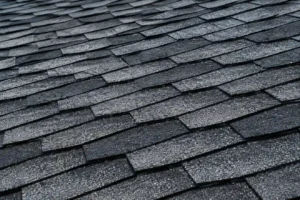
Three-tab shingles are the most basic configuration in the asphalt shingle product family. Each shingle unit presents three uniform tabs separated by cutouts that create the appearance of individual units when installed in overlapping courses. They are flat in profile, lightweight relative to dimensional alternatives, and represent the lowest cost entry point across the types of roof shingles available in Calgary’s residential market.
The performance limitations of three-tab shingles in Calgary’s climate are real and worth stating clearly. Their flat profile and single-layer construction offer less wind uplift resistance than dimensional alternatives, which matters on a roof that will face sustained Chinook winds every winter.
Their thinner cross-section ages faster under Calgary’s UV exposure during summer months and becomes more brittle through freeze-thaw cycling than the laminated products in the architectural category. Most Calgary roofing professionals have moved away from recommending three-tab shingles on primary residences for those reasons, even when upfront cost is the primary driver of the conversation.
Where three-tab shingles retain a legitimate application is on secondary structures: detached garages, outbuildings, and low-visibility accessory structures where the cost difference between three-tab and architectural material is meaningful relative to the structure’s value and where the performance gap is an acceptable trade-off. On a primary Calgary residence that will face the full range of the city’s weather conditions over a 20 to 25-year horizon, the performance limitations of three-tab types of roof shingles are a consistent source of premature failure and early replacement.
Architectural Shingles: The Baseline Standard for Calgary Residential Roofing
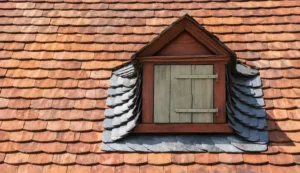
Architectural shingles, also called dimensional or laminate shingles, are the dominant types of roof shingles across Calgary residential replacements and represent the baseline specification that most experienced contractors recommend for primary structures. Their defining characteristic is a laminated construction that bonds two layers of asphalt material together, creating a shingle with more mass, more dimensional depth, and better resistance to the forces that Calgary’s climate applies to a roof over its lifespan.
The wind uplift resistance advantage of architectural shingles over three-tab is a direct consequence of their laminated construction and the heavier adhesive strip that bonds each course to the one below it. Most architectural shingle lines carry manufacturer wind ratings of 110 to 130 kilometres per hour, which covers the sustained wind loading that Calgary’s Chinook events produce without the tab lifting and seam opening that three-tab profiles are susceptible to under the same conditions. That wind resistance difference is one of the clearest performance arguments for architectural shingles as the standard specification in this market.
Manufacturer warranties on architectural shingles from major producers run 30 years on standard product lines and extend to 40 or 50 years on premium offerings. Those warranty terms assume installation conditions that match the manufacturer’s specifications, including appropriate underlayment, correct fastening in the nailing zone, and adequate attic ventilation beneath the assembly.
A 50-year warranty on a shingle installed over an underventilated attic in Calgary will not produce 50 years of performance, because the attic condition accelerates material degradation independently of what the product itself is capable of under correct installation conditions.
Class 4 Impact-Rated Shingles: The Calgary-Specific Upgrade
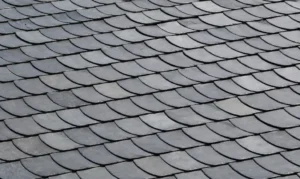
Class 4 impact-rated shingles occupy a category that exists in every market but is genuinely consequential in Calgary in a way that it is not in most other Canadian cities. The UL 2218 Class 4 standard tests roofing materials with two-inch steel balls dropped from specified heights and requires that the shingle surface not crack or fracture under that impact.
Class 4 is the highest rating available, and in Calgary’s hail corridor it represents a performance difference that shows up clearly in the post-storm condition of roofs that received the same hail event side by side.
The mechanism behind Class 4 performance is a modified asphalt formulation that retains flexibility under impact rather than fracturing, combined in most products with a polymer-modified substrate that distributes the impact force across a larger area rather than concentrating it at the point of contact.
Among the types of roof shingles available for Calgary homes, Class 4 rated architectural shingles are the one category where the upfront cost premium carries the clearest return on investment in this specific market. Several Alberta insurance providers recognize Class 4 rated roofing with premium discounts that can offset a meaningful portion of the material cost difference over the life of the roof.
The shingles cost more per bundle than standard architectural products, but the combination of reduced insurance premiums, extended intervals between hail-related claims, and the reduced likelihood of requiring a full replacement within the first decade after installation changes the long-term cost picture substantially.
Luxury and Designer Shingles: When Appearance and Performance Converge
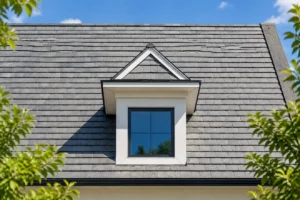
Luxury shingles represent the premium tier of the asphalt shingle product family, engineered to replicate the dimensional appearance of natural slate or wood shake while delivering the installation simplicity, weight profile, and longevity of modern asphalt construction.
They are the heaviest asphalt shingle products on the market, with per-square weights that can run 50 to 70 percent above standard architectural lines, and they are packaged at four bundles per square rather than three because their size and weight reduce the coverage area per bundle.
The performance case for luxury types of roof shingles in Calgary extends beyond aesthetics. Their heavier construction typically produces better impact resistance than standard architectural lines even without a specific Class 4 rating, and many luxury product lines do carry Class 4 impact certification.
Their dimensional profile creates deeper shadow lines that hold their visual appeal longer under Calgary’s UV exposure than flatter profiles, and their mass gives them a different thermal response to the temperature cycling that standard architectural shingles experience through Alberta winters.
The cost of luxury shingle installation in Calgary runs meaningfully above standard architectural specification, reflecting both the higher material cost and the additional labour time their heavier individual units require during installation.
Wood Shake Shingles: Performance Realities in Calgary’s Climate
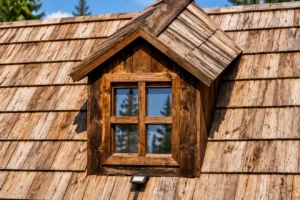
Wood shake shingles carry a visual appeal that is difficult to replicate in asphalt products, and Calgary’s architectural landscape includes a meaningful number of homes where wood shake was the original roofing material and homeowners are weighing whether to replace in kind or transition to a different product. The honest assessment of wood shake performance in Calgary’s climate is less favourable than the product’s aesthetics might suggest.
Wood shakes are dimensionally unstable materials that expand and contract with moisture content changes in ways that manufactured asphalt products do not. Calgary’s climate cycles between dry and cold stretches and the rapid humidity shifts of Chinook events, which creates dimensional movement in wood shake that stresses the fastener points and the overlaps between courses over time.
Fire resistance is another consideration specific to Calgary’s urban interface zones and certain neighbourhood requirements. Wood shake without fire-resistant treatment carries a Class C or lower fire rating, compared to the Class A rating that most asphalt shingle products achieve.
Treated wood shake products are available with improved fire ratings but at a cost premium that narrows the comparison with high-quality asphalt alternatives considerably. Among the types of roof shingles considered for Calgary residential applications, wood shake has the most demanding maintenance profile and the most significant performance limitations in the local climate.
Synthetic Shingles: The Emerging Alternative
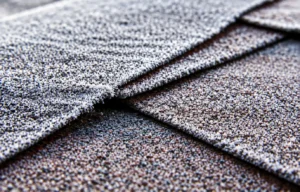
Synthetic shingles engineered from polymer, rubber, or composite materials represent an emerging category in Calgary’s residential market that deserves attention as the product lines have matured. These products replicate the appearance of wood shake, natural slate, or architectural asphalt while delivering impact resistance, dimensional stability, and fire ratings that natural materials cannot match and that standard asphalt products approach but do not always exceed.
Among the types of roof shingles being evaluated by Calgary homeowners who want slate or shake aesthetics without the maintenance demands of those materials, synthetic products have become a credible option rather than a niche curiosity.
Class 4 impact ratings are common across the synthetic shingle category, dimensional stability in freeze-thaw conditions is a design requirement rather than an afterthought, and the weight profile of most synthetic products is lower than natural slate while exceeding asphalt in mass.
The cost of synthetic shingle installation in Calgary sits above architectural asphalt and approaches the lower end of the natural slate range, which is the honest trade-off the category presents. The products deliver genuinely strong performance in Calgary’s conditions, particularly for impact resistance and dimensional stability, but the premium over Class 4 architectural asphalt requires a homeowner to place significant value on the aesthetic outcome to justify the additional investment on performance grounds alone.
How Calgary’s Climate Should Drive Your Shingle Selection
The climate variables specific to Calgary narrow the field among the types of roof shingles available in ways that simplify the decision for most homeowners once those variables are understood. Hail exposure is the most decisive factor.
Any Calgary home on the south or southeast side of the city, in corridors that historical storm tracks favour for large hail, or that has already experienced one insurance claim for roof damage, is a property where Class 4 impact rating in the selected shingle is not optional in any meaningful sense. The question is which Class 4 product fits the budget and the aesthetic preference, not whether Class 4 is worth the cost.
Freeze-thaw performance is the second climate variable that filters the selection. Products with polymer-modified substrates handle the dimensional stresses of repeated freeze-thaw cycling better than standard SBS or oxidized asphalt formulations. Most major manufacturers’ architectural and Class 4 product lines use modified formulations as a baseline rather than a premium feature, which means the freeze-thaw performance gap between standard and premium products within a given manufacturer’s line is narrower than it was a decade ago.
Wind resistance in Calgary’s Chinook corridor requires a shingle with a manufacturer wind rating that covers the sustained wind speeds those events produce. Most architectural shingle lines from major manufacturers meet that threshold, but confirming the specific wind rating of the product being proposed in a contractor’s quote is a reasonable verification step before committing to the specification.
Types of Roof Shingles Making the Right Call for Your Property
Among all the types of roof shingles that Calgary homeowners evaluate, the one that performs best on a specific property is determined by the combination of that property’s hail exposure history, the ownership horizon, the aesthetic priorities of the homeowner, and the budget available for the installation.
For most Calgary primary residences, that combination points toward Class 4 architectural shingles from a major manufacturer as the specification that balances performance, cost, and long-term value most effectively.
The homeowners who get the most from that investment are the ones who pair the right shingle selection with appropriate underlayment, correctly installed ice and water shield at the eave and detail areas, and an attic ventilation system that supports the thermal performance the shingle is designed to deliver. The shingle is the visible layer. Everything beneath it determines whether it performs at its rated level over its full warranty period.
If you want to talk through the shingle options that make sense for your specific Calgary home before requesting quotes, contact Lumina Roofing & Exteriors to schedule a material consultation and roof assessment. We will give you a clear recommendation based on what your property actually presents, not on what is easiest to install or most profitable to sell.